
// 01 ABOUT
Hi, I'm Caesar.
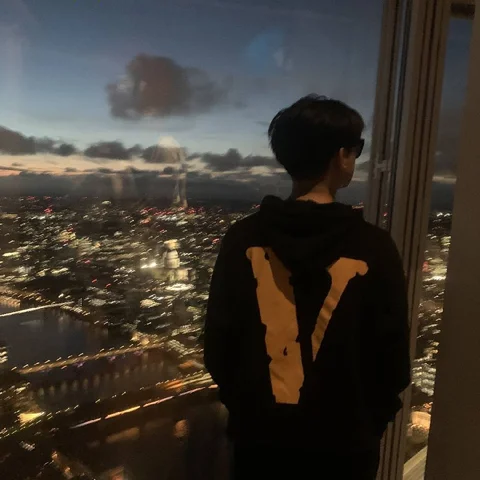
“Filings in one hand, code in the other.”
MSc Finance from the University of Sheffield, ranked first in my programme, and . After three years at a securities brokerage I moved into AI-driven product building, and I focus on turning ideas into products. Now building products with AI, open to new opportunities in AI products / fintech, and also open to collaborations.
// 02 WORK · Work
Things I've built.
[LIVE · SaaS]
AI Shop Audit
Checks whether ChatGPT, Perplexity and other AI shopping assistants can read a Shopify store; scored report with fixes in 10 minutes.
→ Public beta · 100+ Shopify stores scanned
$open aishopaudit.com ↗[LIVE · SaaS]
CrawlAudit
Free crawl check for Shopify stores: robots, sitemap, product data and access for 9 AI crawlers, scored in one report.
→ Free · no signup · 9 AI crawlers in one run
$open crawlaudit.tech ↗[LIVE · WEB]
yinshi
Classical Chinese poetry reader with pinyin over every character, in a rice-paper and cinnabar-seal design.
[LIVE · WEB]
earnings-card
Type a ticker, get 7 share-ready earnings cards built from official SEC filings.
quark-skill
An Agent Skill that saves cloud-drive resources to Quark in one sentence: PanSou search + Quark’s official save, no cookies.
$open github ↗muse-file-bridge
A bridge that lets AI read and write local files on your Windows PC.
$open github ↗renqing-ledger
A fully offline ledger for gift money: no network, no account, free and open source.
$open github ↗[LIVE · WEB]
checkup-brief
Turns a checkup report into a one-page plain-language brief: traffic-light flags, what to test next, which clinic to see. Runs locally, nothing uploaded.
duetfolio
Portfolio tracker for US + Hong Kong stocks: multi-currency valuation, XIRR annualized returns, full-stack FastAPI + React.
ai-usage-meter
Subscription quotas and reset countdowns for Claude, Codex, Grok, Gemini and Copilot, in your menu bar.
$open github ↗agent-craft-cn
A Chinese-native skill pack of agent development methods, one-step install into Claude Code / Codex.
$open github ↗fangge-junshi
Paste in a pitch from a wealth manager, insurance agent or stock-tip group; 24 red flags, each cited to regulators, call it out.
$open github ↗mcd-bigmac-index
A daily tracker of what McDonald's combo meals actually cost after discounts: a homegrown inflation index.
muse-skills
500 ready-to-use Muse tips across 12 areas, from side income and investing to dev, productivity and daily life.
$open github ↗edge-disable-rounded-corners
Turn off the forced rounded corners in Edge 149+ with one click.
$open github ↗clash-verge-ingrid-theme
A frosted-glass theme for Clash Verge, inspired by Ingrid from Street Fighter 6.
$open github ↗dianjing
Circle what bugs you on a screenshot of an AI-built UI; get the design terms and a ready prompt for your AI coding tool.
AlphaDesk
A US-equity research agent prototype: quotes and cited SEC-filing search over MCP; simulated orders need human sign-off.
$open github ↗animal-vision
Drag the divider to see one scene through the eyes of a human, dog, cat, bee, eagle and mouse, rendered live in the browser.
// OPEN SOURCE · PRs merged into projects with 660k+ combined stars, incl. freeCodeCamp and Angular
[MERGED]
freeCodeCamp/freeCodeCamp ★ 458k
- #70826Docs: fixed code-fence languages and Oxford commas in the Python Installation Review lesson
→ Merged into main on 2026-10-13, accepted as my first contribution
[MERGED]
angular/angular ★ 101k
- #71292The Angular developer Skill's linkedSignal docs never mentioned customizing set; added the usage and an example from the official guide.
→ Merged into main on 2026-10-15
[MERGED]
mvanhorn/last30days-skill ★ 66k
- #1196Two spots in the docs still taught the inline --plan form, which breaks shell parsing on a quote; unified on the temp-file form.
- #1197Corrected the “no API key sharing between providers” claim: the legacy TikTok fallback sends the Apify token to another provider.
- #1370Instagram discovery: a 404 from the Google fallback now counts as “no results”, not an error.
→ All 3 PRs merged into main (2026-10-06, 11-10)
[MERGED]
ranaroussi/yfinance ★ 25k
- #2992README never explained default price adjustment: history() / download() use auto_adjust=True, so Close is already adjusted; added a note on Close vs Adj Close.
→ Merged into main on 2026-10-18
[MERGED]
YuanYii/multi-agent-flow ★ 31
- #11Security: fixed shell injection in the Windows fallback
- #13Security: CORS locked to same-origin, blocking cross-site reads
- #12CI: gate now fails closed on errors
- #14Reliability: fixed file-lock timeout, added regression tests
- #10Added the MIT LICENSE
→ All 5 PRs merged into release_v12 (2026-10-04 to 10-08)
[APPROVED]
nexu-io/open-design ★ 106k
- #8580If reading the daemon config failed at startup, the web client overwrote it with defaults and silently re-enabled telemetry the user had turned off; now the write-back is skipped when the read fails.
→ Approved by maintainer, awaiting merge (2026-10-07)
[APPROVED]
Stirling-Tools/Stirling-PDF ★ 95k
- #8442Merging images produced a PDF that kept the .jpeg name, breaking later PDF steps; the output now always gets a .pdf extension.
→ Approved by maintainer, awaiting merge (2026-10-13)
[APPROVED]
hoppscotch/hoppscotch ★ 80k
- #6705The scrollbar thumb was nearly invisible in both light and dark themes; raised its contrast without changing layout.
→ Approved by maintainer, awaiting merge (2026-10-12)
[IN REVIEW]
anthropics/skills ★ 188k
- #1969mcp-builder advised “concise tool descriptions”; per the official docs it now asks for precise, complete ones.
→ In review
// 03 LOG
Recent writing.
2026-11-24
AI Notes: One Man, Repriced
“The risk did not go away. It just found a new guarantor.”
On November 23, 2026, Nvidia announced that its board had voted unanimously to reinstate Jensen Huang as president, CEO and director, effective immediately. Eleven days had passed since he resigned on November 12.
The resignation followed reports of several extramarital affairs, one of them with a woman US intelligence suspected of ties to Chinese intelligence services; The New York Times named her as Alice Huang. After he stepped down, CFO Colette Kress served as interim CEO. She has now returned to the CFO role.
Nvidia closed up 31.5% that day at $165.05, which Reuters said was its biggest one-day gain since May 9, 2003. According to CNBC, the stock had fallen almost 33% from November 8, when he admitted to one affair.
What makes this worth watching is not that a company got its CEO back. It is how the market puts a price on one person, and who ends up guaranteeing that price.
One man, one chain
On the same day Nvidia rose 31%, Micron rose 19%, CoreWeave 22% and the Philadelphia Semiconductor Index 14%, and memory ETFs reportedly had their best day since launch. Nothing about how these companies operate changed in those eleven days. The only thing that changed was who was running Nvidia.
Key-person risk usually affects the valuation of one company. This time it spread across the whole chain, because of where Nvidia sits in this ecosystem. It does not just sell chips; it takes stakes in customers, takes part in financing and makes capacity commitments to its supply chain. These deals are negotiated on relationships and trust, and those relationships and that trust are concentrated in one man. For memory makers upstream and neoclouds downstream, whether Huang is there decides whether the next few years of orders and financing get done.
So what the market marked down over those eleven days was not Nvidia's management ability, but whether the web of deals built around him could survive. CNBC cited people familiar with the matter as saying some investors found Kress flat on the November 17 earnings call and at the all-hands meeting the next day. That judgment may not be fair, but it shows the market was not looking for a competent manager. It was looking for the node at the center of that web.
How the board turned around
The timeline was short. On November 17, Huang said publicly he was willing to come back; the same day, board chair Harvey Jones said on the earnings call that the board did not intend to reinstate him. That same day, the US Justice and Commerce Departments jointly announced an investigation into whether Singapore company Megaspeed had diverted Nvidia chips to China. Alice Huang had once been an executive there.
The turn came late last Friday night. According to CNBC, senior Trump administration officials contacted the board and told it that Huang had not violated any national-security laws. The board then reached out to Huang and, after two meetings on Saturday and Sunday, voted. The board's statement said the decision "took into account input from senior levels of the US government," and that on that basis it was confident reinstatement posed no national-security risk.
Trump was blunter in an interview with CNBC: "I made the deal." He added that persuading the board this time was much easier than a week and a half earlier. Asked whether the market's fall had influenced his thinking, he said, "Probably."
What first led the board to refuse reinstatement was a risk no one could quantify: nobody knew how far the matter might reach on the national-security side. The government's statement turned that unknown into a guarantee. The problem is that the guarantee is not the conclusion of an investigation. The independent investigation the board commissioned from Wachtell Lipton has not finished, and the statement says it will be "carried through to completion." The decision came first and the conclusion will come later. The order is reversed.
A new guarantor
Lior Prosor of Deep33 said that day that the "Trump put" used to mean the president would step in once the market fell far enough, and that Huang's reinstatement suggests it may also cover a handful of top CEOs.
The weight of that remark is that it changes who owns the risk. Whether a CEO could stay used to depend on the board, the investigation and corporate governance; now part of it depends on his relationship with the government. CNBC cited a person familiar with the matter as saying Trump and Vice President Vance see Huang as key to counterbalancing closed-model companies such as Anthropic, and believe a close relationship with him is the best way to keep advanced chips from reaching prohibited customers.
That means Huang's position is now tied to a set of policy positions. Political backing has an expiry date, and it has a counterparty. Lawmakers from both parties criticized the reinstatement; Senator Warren said it does not change the fact that Nvidia still owes Congress an explanation of its export-control compliance. One of the things the market worried about last week was AI spending slowing after the midterm elections. A guarantee that comes from the government gets repriced as political power shifts.
Succession has been put off
Prosor also said the reinstatement "buys time" for Nvidia to develop successors and build a succession plan.
Those eleven days already answered the succession question: there is no one ready. The CFO doubled as interim CEO, and the market's response to the transition was to keep falling. A company worth trillions of dollars that can only bridge its founder's absence with a stand-in carries a risk that is itself underpriced.
Nvidia is also patching its institutions. The board recently set up a national security and export control committee of independent directors and began hiring a chief compliance officer who reports to the nominating and corporate governance committee. The direction of these arrangements is to move part of the judgment from one person into the institution. The difficulty is that after this episode, Huang returns in a stronger position than before he left: he was brought back under government backing, investor lobbying and pressure from the share price. If the board wants to constrain him, it has fewer chips to play than it did eleven days ago.
What's still hanging
On December 1, Huang faces closed-door questioning before three committees including the House Foreign Affairs Committee, followed the next day by Nvidia's general counsel; on December 3, he is due to appear as the sole witness at a public Senate Banking Committee hearing on export controls. On November 23, the Commerce Department put Megaspeed on its trade blacklist, and the independent investigation is still under way.
If any of these proceedings turns up new damaging information, the government's guarantee will have to be reassessed. And those eleven days have already shown that Nvidia's risk travels along the whole chain, on the way down as well.
On November 23, the price the market put on Huang's return was 31.5%. Read the other way, that number also says that much of the confidence in the AI trade rests on a handful of people.
Permalink: https://cybercaesar.bond/en/log-019
2026-11-24
Nasdaq Notes: One Thing Fixed, Rates Still Where They Were
“When stocks loosen up, the case for a rate hike gets one reason stronger.”
On Monday, November 23, 2026, the Nasdaq Composite closed at 24,089.56, up 6.51%; the Nasdaq-100 rose 6.86% to 26,746.10; the S&P 500 rose 4.73% to 7,237.17; and the Dow rose 3.01% to 49,595.31. It was the best day for both the Nasdaq and the S&P since April 2025. The Philadelphia Semiconductor Index rose 14.03%, and Nvidia rose 31.5%.
There was only one direct cause: Nvidia's board reinstated Jensen Huang as CEO. Judging by the gains alone, it looks as if last week's panic had been wiped clean. Peel back the reasons for last week's fall one layer at a time, and Monday repaired only one of them.
What fell last week
Last week was the worst week for the Nasdaq and the Dow in more than six years. According to CNBC, the Nasdaq fell 10% in a week, its biggest weekly drop since March 2020; on Friday, November 20, all three major indexes entered correction territory, the Nasdaq erased all of its 2026 gains, and the Nasdaq-100 was nearly 20% off its high, close to a bear market. On Friday alone, the Philadelphia Semiconductor Index fell 10.73%.
This drop stacked at least three layers of causes. The first was Nvidia itself: Huang resigned on November 12, and the company's place in the AI chain turned one personnel change into a risk for the whole sector. The second was the financing of AI capital spending: a large share of it is funded with debt, the returns have not arrived yet, and the market also worried this spending would slow after the midterm elections. The third was rates: inflation data ran hot, and Fed Governor Waller raised the possibility that December might call for a 50-basis-point hike.
Anthropic completed a record IPO on November 19, and Nvidia's earnings were not bad, but neither stopped the fall. That shows the market last week was not trading any single set of results. It was trading these layers of uncertainty all pressing down at once.
Which layer Monday repaired
Huang's return removed the first layer.
What sets this layer apart is that it has nothing to do with the economy or with rates. It is a company-specific risk, so it can disappear overnight. The faster it disappears, the sharper the rebound: the stocks that rose most on Monday were exactly the ones that fell hardest last week and are most tightly tied to Nvidia. The tech sector rose about 9%, and energy was the only sector that fell.
The other two layers got no new information on Monday. Where the money for AI capital spending comes from, and when the returns will arrive, still had no answer that day. Based on Monday's close, the Nasdaq Composite was still about 1.7% lower than a week earlier; Monday's surge had not yet made up for last week's fall.
Bonds didn't cheer along
On a day stocks rose 6%, the bond market's reaction was restrained. According to Newsquawk's closing data, the 2-year Treasury yield rose 2.3 basis points to 4.67%, while the 10-year actually fell 2.2 basis points to 4.93% and the 30-year fell to 5.30%, flattening the yield curve. The dollar index rose to around 104.3, which Reuters said was its highest since March 2025, as traders bet on a more hawkish Fed.
There is a reverse mechanism here. Last week's crash in stocks was itself tightening financial conditions, which gave the Fed a reason to slow down on hikes. Once stocks rebounded on Monday, that reason weakened, and short-term rates rose as a result. In other words, when stocks loosen up, the case for a rate hike gets one reason stronger. New York Fed President Williams said the same day that inflation is "too high," leaning toward a hike at the December 8–9 meeting, and markets priced the odds of a December hike at around 95%.
Monday's November PMIs pointed the same way. The flash manufacturing reading was 53.7 and services 54.7, both down from October but still in expansion territory; S&P Global's chief economist said the price components suggest inflation will stay well above the 2% target for the next few months.
For the AI chain, long-term rates near 5% mean two things: they are the discount rate on future cash flows, and they are the borrowing cost for capital-heavy projects such as data centers and neoclouds. Neither got cheaper on Monday.
Breadth, and Anthropic
Two other sets of numbers also say this was a repair, not yet a change in trend.
One is breadth. According to Reuters, 4,088 Nasdaq stocks rose that day and 1,035 fell, a broad advance; but only 76 hit new highs while 392 hit new lows. On a day the index rose 6.5%, new lows still outnumbered new highs more than five to one, which means many stocks were only bouncing off their lows and had not broken out of the downtrend. The VIX fell 25.8% to 26.62, well below last Friday's high of 35.89, but still elevated.
The other is Anthropic. It was one of the few AI companies that did not join the rally; CNBC reported it was down about 3% at one point in the afternoon. Its valuation comes almost entirely from future revenue growth and has nothing directly to do with who runs Nvidia, so the removal of Monday's layer of risk did nothing for it. What it faces is the second layer: whether the high growth expected at its listing will materialize, and whether the market is still willing to pay today's price for revenue far in the future. That it did not rise shows the second layer is still there.
What to watch this week
On Wednesday, November 25, PCE and third-quarter GDP come out together, the most important inflation data before the December meeting. Markets are closed on November 26 for Thanksgiving and close early at 13:00 ET on the 27th. On earnings, HPE reports after the close on the 23rd and Dell after the close on the 24th. The two have fallen about 25% and 34% this month, and the question is whether AI server orders and margins live up to earlier expectations.
BTIG technical analyst Krinsky said in a Sunday note that he expects the S&P 500 to bounce in the short term to 7,250–7,350 and then most likely head lower again. On Monday the S&P closed at 7,237, already near the bottom of that range. Huang's questioning and hearing before Congress on December 1 and 3 could also bring the first layer of risk back in another form.
Monday removed one idiosyncratic risk. The macro parts, rates, the dollar and AI financing, are still where they were last Friday.
This is only my own reading, not advice to buy or sell.
Permalink: https://cybercaesar.bond/en/log-020
2026-11-24
Growth: From Taking Dictation to Getting Things Done
“Patches address what the product is now. Direction addresses what it should grow into next.”
On November 16, 2026, NetEase Youdao's Bage Shuo announced the results of its user suggestion campaign: 1,626 people took part, 8 were chosen as the first "honorary co-founders," and under the name CyberCaesar I received an outstanding contribution award.
Bage Shuo is an AI voice input app, and I use it every day. When I saw it collecting user suggestions on October 16, I wanted to take part, but for a while I didn't know what to suggest. Then it became clear: the thing most worth writing about wasn't what felt clumsy, but how I understand the product: what it is now, and what it should grow into next.
Same input app, different things to write
Over a day I switch between a few places: WeChat, the ChatGPT and Claude chat boxes, VS Code, and email. I'm speaking in all of them, but the text each one needs is completely different.
WeChat wants spoken language, the closer to how I normally talk the better. Email wants complete, formal written language. In an AI chat box, what I actually want is a clearly structured prompt. And anything to do with code comes mixed with a lot of English terms.
Voice input today basically gives every place the same standard output. After I finish speaking, I often still have to fix the tone by hand, or turn spoken rambling into something organized. Input got faster, but the cleanup afterwards didn't go away.
Called an agent, used like dictation
Bage Shuo positions itself as an AI voice agent. In actual use, what it does is turn what I say into text, and then it stops. Accurate recognition, natural punctuation, filler words removed: it does all of that well, but at heart it's still a smarter dictation tool.
The difference between dictation and an agent is who keeps working after I stop talking. Dictation ends at "the text is there," and everything after that is on the person. An agent should understand what I'm trying to do with that sentence and take care of the next step for me.
I think the distance between the two is the room this product has for its next stage.
A three-step roadmap
The suggestion I finally submitted was titled "From 'Taking Dictation' to 'Getting Things Done': a three-step upgrade roadmap for Bage Shuo." In one line: first make it write right, then make it easy to correct, and finally make it get things done.
Step one is writing right. Switch the polishing style automatically based on the app you're in: keep it conversational in WeChat, make it formal in email, turn it into a prompt in an AI chat box. This step needs no new interaction. Users might not even notice the change, only that they edit less.
Step two is easy correction. When recognition gets something wrong, fix it by voice. For example, when I say "Nasdaq" in Chinese, it often comes out as a similar-sounding phrase meaning "that one." I should be able to just say "change that one to Nasdaq," without going back to the keyboard to find the spot. Alongside this, I suggested industry hot-word packs: in fields full of proper nouns, like finance and programming, recognition errors would drop a lot.
Step three is getting things done. Use "Bage, help me" as a trigger and have it understand the intent and act on it, for example by drafting an email directly. Only at this step does it really turn from an input tool into an assistant that gets things done.
There's also one small point I run into every day: I trigger voice input with a mouse side button, and right now I press once to start and again to stop. If it worked as hold to talk, release to stop, like a walkie-talkie, it could all be done with one hand.
Why this order
These three steps aren't a flat list of features. They're ordered by what depends on what.
Writing right is about trust. Users will let it do more only if what it already does is basically error-free. Easy correction is about control. Only when mistakes can be fixed quickly, in the same way they were made, will users hand it longer and more important content. With trust and control in place, getting things done has a foundation. Without them, a tool that takes actions on its own just makes people nervous.
Patches address what the product is now, and the team looks at it every day; they know better than any user where it feels rough. Direction addresses what it should grow into next, and that needs to be seen from the seat of someone who uses it every day.
Who it's written for
The campaign rules said that for repeat submissions only the last one counts, and no one can win twice. So I didn't split it into several entries. I combined everything into one: a description of about 988 characters plus a full document, submitted on October 23.
While writing it, I kept thinking that the reader wasn't a judge but the product lead who has to decide what to build next. What that person needs isn't a list of problems but a roadmap that can go into a plan: what each step does, why it comes in that order, and what it brings once it's done.
On November 10, someone from the Bage Shuo team contacted me on WeChat to ask for a nickname and photo to display. Only when I saw the official announcement on November 16 did I know for sure.
I'd rather see this result as a piece of practice: starting from a user's seat and thinking about the questions a product lead is thinking about.
Permalink: https://cybercaesar.bond/en/log-021
// 04 MARKETS · Market terminal
Live board: the three major indices.
> intraday today
Loading intraday…
> Snapshot at the US close, 2026-10-08 · connecting to live quotes…
Market data from Tencent Finance, for reference only
// 05 CONTACT · Contact
Get in touch.
// Open to new opportunities and collaborations. Email me. I always reply within 24 hours.
- >email:[email protected] ↗
- >github:@TTNAN ↗
- >x:@T_Caesar_ ↗